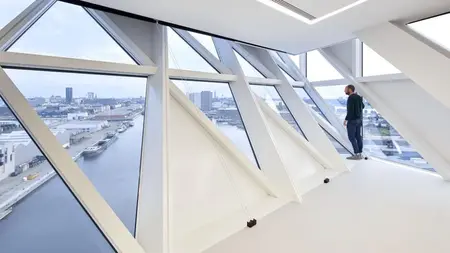
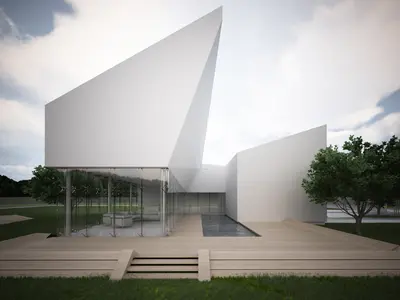
Making the world a more beautiful and more sustainable communal home requires transforming our working spaces to offer their occupants greater comfort and quality of life. Architecture, design, organization, materials – new solutions are already emerging to reconcile efficiency and well-being, as well as to ensure that every working space benefits all its users. We meet some of the experts contributing to this transformation.
“In 2010, the sustainable city concept was becoming lost in vague confusion and red tape. What was needed was to put forward a concept that would reconcile ecological ambition with pleasurable urban life and cost control.” by Jean Haëntjens, economist, urban strategist and author of La ville frugale (FYP, 2011) and Eco-urbanisme (Ecosociété, 2015).
We believe that if we are to improve life in the world, we must build cities that are more breathable, and therefore healthier, and which provide a better quality of life for everyone. Achieving that requires us to take concerted action to combat pollution - including inside our homes - reduce our carbon emissions, and conserve and expand pockets of the natural world. We wanted to discuss these issues with some of those who are working to deliver such a transformation.
The campaign is already paying off, since every Member State must now submit a long-term national renovation strategy for the transformation of its housing stock between now and 2050, with milestone targets for 2030 and 2040. National implementation of this European policy is proving rather slow, with only 13 countries having prepared their strategies to date, but at least we are moving in the right direction.
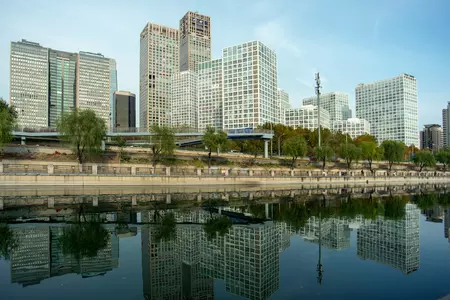
Between 1950 and 2011, the world's urban population increased fivefold. In 2007, for the first time, the number of people living in cities surpassed the number of people living in the country.
How can personal desires for freedom of travel and mobility be reconciled more successfully with our shared expectations for sustainable development? What alternatives are there today? We reached out to meet with those who are inventing tomorrow’s solutions today.
The concept of “decarbonization” has been in vogue recently in political speeches and global environmental events, but it has not yet gained enough attention in the field of architecture to profoundly change the way we design and construct the world of tomorrow.
With most of the world living in cities and growing villages, people tend to spend the majority of their time indoors. When not at home, we are working, learning, or even engaging in fun activities in enclosed, built settings. All in all, 90% of our time is occupied inside.
In a predominately urban world that constantly has to deal with complex problems such as waste generation, water scarcity, natural disasters, air pollution, and even the spread of disease, it is impossible to ignore the impact of human activity on the environment. Climate change is one of the greatest challenges of our time and it is urgent that we find ways to slow down the process, at the very least.